
Introduction
Some books stay with you long after you finish the last page.

Frank Herbert’s Dune is one of those rare stories. First published in 1965, this science fiction masterpiece has drawn generations of readers into its vast, complex world. And here’s the thing: in 2026, it matters more than ever.
If you are an adult fantasy reader who feels tired of predictable plots and teenage heroes who save the universe every other chapter, you are not alone. Many readers struggle to find mature, sophisticated fantasy that goes beyond what YA conventions offer. You want stories with real weight. Stories that ask hard questions about power, religion, and human nature. Stories that do not hold your hand.
That is exactly what Dune delivers.
Set in a distant future where a feudal system governs a universe colonized by humans, Dune focuses on Arrakis, a harsh desert planet that holds the most valuable substance in existence: spice. The story explores the multilayered interactions of politics, religion, ecology, technology, and human emotion as different factions of the empire confront each other. After Paul Atreides’ father is killed, Paul must rely on the native Fremen people for his survival and rise to become the legendary figure Muad’Dib.
But Dune is not a simple hero’s journey. Herbert wrote something much deeper. The consequences of Paul’s rise to power and the universe’s most powerful institutions form the central thematic core of the plot. This is not light reading. It is dense, challenging, and deeply rewarding.
This comprehensive Dune book review will walk you through what makes this novel a cornerstone of adult fantasy. We will look at its narrative structure, its mature themes, and why it still captivates readers nearly sixty years later. Whether you have read Dune before or are picking it up for the first time, this analysis will help you see it with fresh eyes.
For discerning adults who crave real depth in their reading, Dune stands alongside the best hard sci fi novels ever written. It offers the kind of sophisticated storytelling that makes you think long after you close the book. And if you enjoy this level of complexity, you might also appreciate the scientific ingenuity found in Project Hail Mary book or other thought provoking Dune books in the series.
Ready to understand why Dune remains essential reading for mature fantasy fans? Let us dive in.
An Epic of Politics and Ecology: Dune’s Core Premise
At the heart of Dune lies a planet that could kill you in a hundred different ways. Arrakis is a desert world where water is more precious than gold. But it holds one thing the entire universe cannot live without: spice. This is no simple fantasy setting with castles and dragons. Herbert built something much more grounded and urgent.
The story centers on the conflict between two noble houses, the Atreides and the Harkonnens, over control of Arrakis. The Emperor gives control of the planet to House Atreides, but it is a trap. What follows is a struggle for survival that involves betrayal, war, and the fate of the galaxy. As the Wikipedia entry notes, “The story explores the multilayered interactions of politics, religion, ecology, technology, and human emotion as the factions of the empire confront each other.
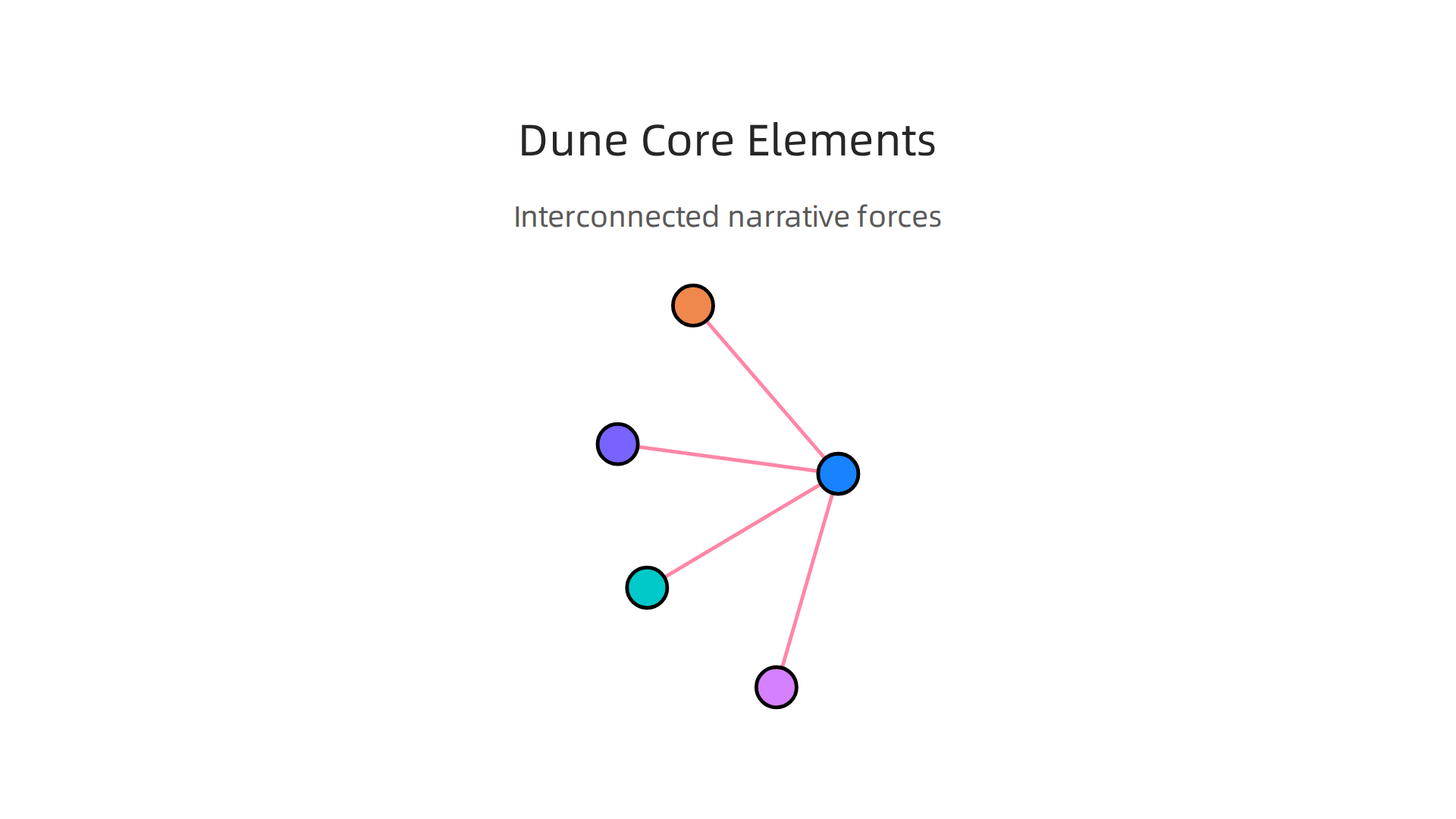
” That is a lot of layers. And that is exactly what makes it so satisfying for adult readers.
Here is where Herbert flips the script on traditional fantasy. Instead of a medieval European backdrop, he gives us a futuristic feudal society set across dozens of colonized worlds. The hero does not swing a sword; he uses strategy, political maneuvering, and deep understanding of ecology. The desert is not just a backdrop. It is a character. The Fremen, the native people of Arrakis, have adapted to the harsh environment in ways that feel real and earned. After Paul Atreides’ father is killed, Paul must rely on them for survival and eventually rise to become the legendary figure Muad’Dib, as Plugged In summarizes.
The scarcity of water and spice creates adult-level stakes. Control of Arrakis means control of the most valuable substance in the universe. Spice extends life, enables space travel, and fuels the entire economy. This is not a story about good versus evil in a simple sense. It is about power, resource wars, and the cost of leadership. One reviewer calls it a book that “contains violence, political manipulation, and some dated offensive content” and recommends it only for mature teens and adults. That honesty matters. Dune does not sugarcoat the dark side of human ambition.
For readers tired of predictable plots, this premise delivers real depth. You get eco-politics, religious manipulation, and a protagonist whose journey is anything but a clean hero’s arc. If you appreciate this kind of complexity, you might also enjoy exploring our curated list of adult fantasy books for mature readers who want stories with real depth. These are titles that do not hold back on the tough questions either.
Dune is not a light read. It asks you to think about how systems of power actually work. And that is exactly what makes it a standout among the best hard sci fi novels ever written.
The Characters That Define a Galaxy: Paul Atreides and the Cast
Now that you understand the brutal world of Arrakis, let’s meet the people who fight, love, and scheme within it. The characters in Dune are not your typical fantasy heroes. They are complex, flawed, and often hard to like.

That is exactly what makes them so memorable.
Paul Atreides starts as a noble heir, trained by his mother in the mysterious ways of the Bene Gesserit. He has visions, he feels the weight of destiny, and he is forced to grow up fast. But here is the thing: Paul is not a straightforward good guy. His journey from refugee to messianic leader is full of moral compromise. He uses religion as a tool. He starts a war. The consequences of his rise to power are the central thematic elements of the plot, as noted by The Science Survey. He is a hero who becomes something darker, a leader who knows the terrible future he is creating but walks into it anyway. That is rare in fantasy.
The supporting cast is just as layered. Lady Jessica is Paul’s mother, a Bene Gesserit who defies her order’s rules to give birth to a son instead of a daughter. She is loyal, fierce, and deeply human. Gurney Halleck is the family’s warmaster, a poet and a warrior who carries the pain of loss. Stilgar, the Fremen leader, is not just a tribal stereotype. He is a pragmatist who must balance tradition with survival. Plugged In describes how after Paul’s father is killed, Paul must rely on these native people for his survival and rise to become Muad’Dib. Each character feels like they have a full life off the page.
Now contrast this with typical YA hero arcs. In most YA fantasy, the hero stays morally clean. They defeat evil without losing themselves. That is not how Dune works. Paul makes choices that are hard to defend. He embraces manipulation and violence. The Book Suite review points out that the book contains violence, political manipulation, and some dated content, recommending it only for mature teens and adults. This is not a story that hands you a clean hero. It asks you to sit with the messiness of power.
If you appreciate characters this rich and complex, you might enjoy finding more books that skip the YA clutter. Check out our guide to finding adult fantasy books on Kindle online without the YA clutter. It will help you discover more stories that respect your intelligence.
Dune gives you a cast that feels real in a way few books can match. That is one reason it stands tall among hard sci fi novels. These characters will stay with you long after you turn the last page.
Themes That Resonate: Religion, Ecology, and Power
The characters of Dune would not mean much without the themes that drive their choices. Frank Herbert packed this book with ideas that feel even more urgent today than they did in 1965. Three big ones stand out: the danger of messianic religion, the urgent need for ecological care, and the ugly reality of political power.
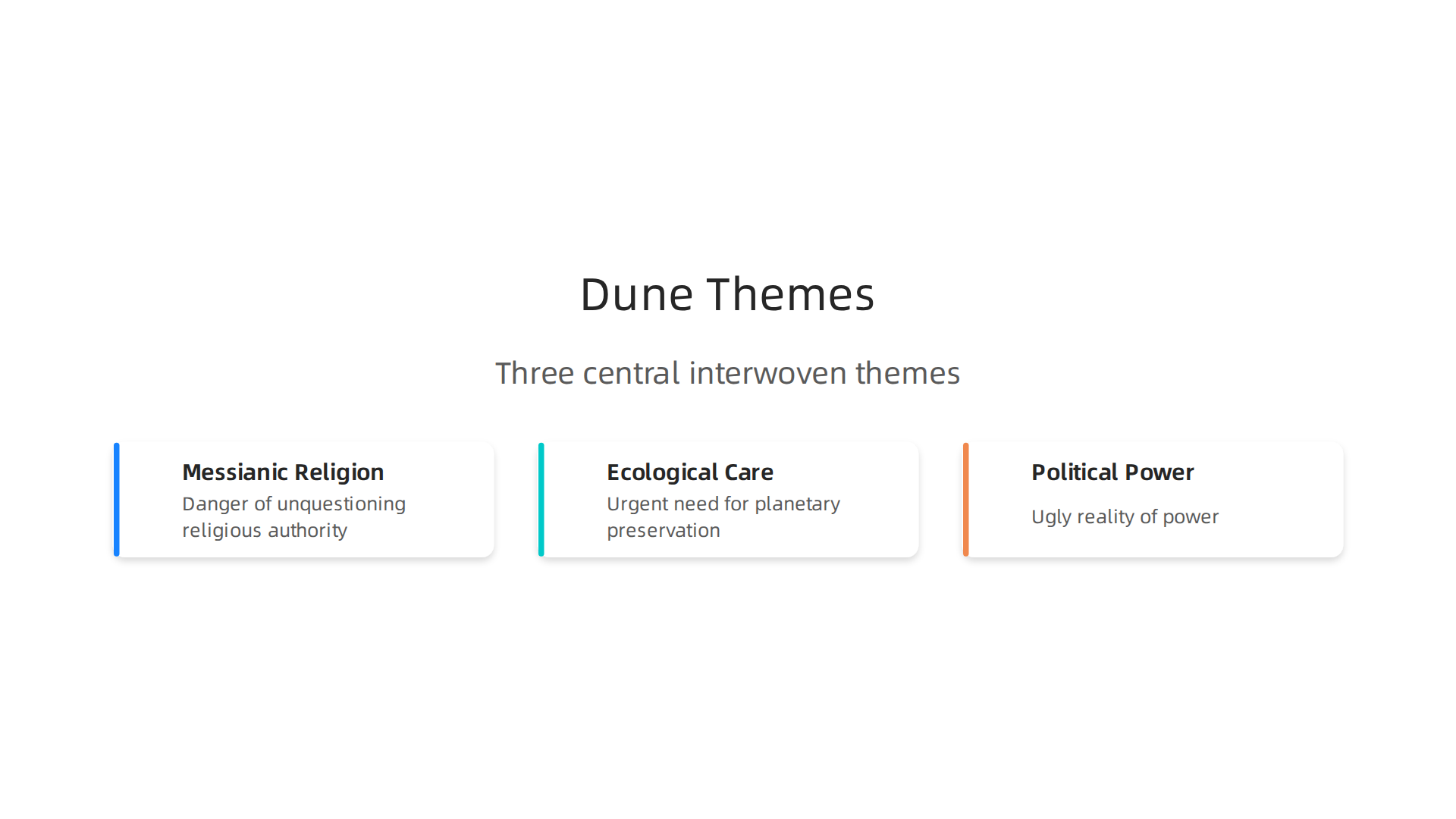
Let us start with religion. Dune is not a religious book, but it is deeply about how religion works. The Bene Gesserit have spent centuries planting religious myths on far worlds, including the Fremen belief in a coming messiah. They did this so they could control people later. But Paul Atreides steps into that prophecy, and it backfires. As SparkNotes explains, Paul uses his religious power over the Fremen to pursue his own goals, but he also knows he is unleashing a genocidal war in his name. The scary part is that he cannot stop it. The religion becomes bigger than him. Herbert is telling us that handing someone religious authority is dangerous, not because the person is evil, but because the crowd turns a human leader into a god they will kill for.
Now think about ecology. Arrakis is not just a cool setting for sandworms. The planet itself is a character, and its environment is a warning. The Fremen have a dream of turning their desert world green. They work for generations on a secret terraforming plan. Meanwhile, the Empire strips the planet of spice without caring about the damage. This makes Dune a pioneering work of climate fiction, as noted by Audible’s analysis. Herbert was writing about oil dependence, but the same logic fits our real world fossil fuel crisis today. Take everything, give nothing back, and leave the mess for the next generation. The Vocal Media review points out that the ecology of Arrakis actively shapes the culture and religion of its people. What you do to the land changes who you become.
Then there is power. Herbert shows us power as a dirty game. The Emperor, the Harkonnens, the Bene Gesserit, and even Paul himself all fight to control spice, people, and information. Prophecy is just another tool in that fight. Who gets to decide what people believe? That is the real seat of power. In Dune, the answer is never the common person. It is always the schemers in the shadows.
These themes make Dune a perfect example of what hard sci fi novels can do: use future worlds to shine a light on present problems. If you enjoy stories that ask uncomfortable questions, you will want to check out our curated list of the best sci-fi audiobooks for adults with quality narrations and mature stories. Those stories carry the same weight.
This is not a book you read once and forget. Dune stays with you because its themes are real. Religion, ecology, and power are not just topics in a novel. They are forces that shape your life every day. That is why this dune book review is not really about sand and spaceships. It is about us.
Writing Craft: Herbert’s Prose and Narrative Structure
Let me be honest with you. When I first cracked open Dune, the writing hit me like a sandstorm. It is not the kind of book you breeze through while waiting for coffee. Frank Herbert writes dense, philosophical prose that asks you to slow down and think.
Every paragraph feels layered. You get internal monologues from characters that reveal their deepest fears and secret plans. And sometimes you have to read a sentence twice to catch all the meaning.
That is by design. Herbert was a journalist and a deep thinker. As this Scribd analysis of his life and influences points out, his early passion for writing and environmental themes shaped everything he put on the page. The prose in Dune is not there to look pretty. It is there to make you feel the weight of the world. When Paul struggles with his visions, you feel that struggle in the words themselves. Herbert uses a narrator who jumps inside characters’ heads. You hear their thoughts, their doubts, their whispered prayers. That internal voice is what makes the story feel so personal, even when the stakes are galactic.
Now let us talk about structure. Herbert does not tell the story from one person’s point of view. He jumps between characters. One chapter you are with Paul on the run. The next chapter you are with Baron Harkonnen scheming in his dark chamber. That multiple POV style gives you a god’s-eye view of the conflict. You see the good, the bad, and the ugly all at once.
And he does something else clever. He includes appendixes. A full map of Arrakis. A terminology guide. Even an index of the Fremen culture. That might sound boring, but it is not. It makes the world feel real. You can flip to the back and check what a stillsuit is or where the Shield Wall sits. That kind of worldbuilding is a hallmark of great hard sci fi novels. Herbert treats his readers like adults. He does not explain everything in the story. He trusts you to find the answers in the appendix.
How does Herbert compare to other adult fantasy authors? Think of J.R.R. Tolkien. Tolkien built Middle-earth with maps, languages, and long histories. Herbert does the same, but he keeps the action tighter. Think of Ursula K. Le Guin. She used simple elegant language to explore big ideas. Herbert uses bigger, more layered sentences, but he hits those same deep questions about power and humanity. If you enjoy that kind of thoughtful prose, you might also like exploring our collection of adult fantasy books for mature readers who want stories with real depth. Those books share the same respect for language and theme.
So do not let the dense style scare you. Once you settle into Herbert’s rhythm, the prose becomes a strength, not a barrier. In this dune book review, the writing craft matters because it proves that a story about sand and spice can also be a literary experience.
World-Building at Its Finest: Arrakis and the Spice Economy
That literary density does not stop at the prose. It pours into the world itself. Arrakis feels like a real place with real rules. And those rules are not just for show. They drive every conflict in the story.
Let us start with the ecology. Arrakis is a desert planet with almost no water. The Fremen people who live there have turned survival into an art form. They wear stillsuits that recycle every drop of moisture from their bodies. They have learned to walk without rhythm so the sandworms do not sense them. The sandworms themselves are the true rulers of the deep desert. They are massive, ancient, and they guard the spice.
Herbert did not just invent a desert. He used actual research into social sciences like history, psychology, and linguistics to build the Fremen culture from the ground up.

As this analysis from Dunescholar explains, the world-building is rooted in real human behavior. That is why the Fremen feel like a real people, not a plot device.
Now the spice. Melange is the most valuable substance in the universe. It extends human life. It unlocks prescience. And it makes faster-than-light travel possible for the Spacing Guild. Without spice, the empire collapses. That single resource turns Arrakis into the most important planet in existence.
One writer described spice as the magical core of the plot that everything revolves around. I agree. But it is more than magic. Scholars have noted that the spice acts as an aid to bringing together various threads in the world and integrating them. It ties the ecology, the politics, and the economy into one tight knot. And that is where the adult themes hit hardest.
This is not a simple story about good versus evil. It is about colonialism. The Harkonnens and the Emperor see Arrakis as a resource to squeeze dry. The Fremen are the indigenous people being exploited for that resource. The spice economy runs on oppression. And as this political analysis points out, the political settlement of Dune is something from our past, not our future. Herbert borrowed from real human history. Feudalism. Resource wars. Imperial control. It all shows up on Arrakis.
The interdependence is also key. No one can escape the spice. The Emperor needs it. The Guild needs it. The Bene Gesserit need it. But the Fremen live without it in the deep desert. They are the only ones who are truly free. That tension makes the story feel urgent and real.
This is what makes a dune book review so compelling. The world is not a backdrop. It is a character with its own needs and dangers. If you love worlds with this level of built-in conflict, you might enjoy exploring how classic literature for adult fantasy readers unlocks the depth you crave. Arrakis stands alongside those great worlds as a place you can almost feel on your skin.
For readers of hard sci-fi novels like Project Hail Mary, the ecology of Arrakis offers a different kind of challenge. It is not about surviving in space. It is about surviving on a planet that wants to kill you while a galaxy fights over what it produces. That is what makes the Dune books so unforgettable.
The sand. The spice. The worms. The water. It all works together to tell a story that feels both ancient and brand new.
Dune’s Enduring Legacy and Influence on Adult Fantasy
Frank Herbert did not just write a bestseller. He created a new standard. Any serious dune book review has to measure the genre against Arrakis.
You can see Dune’s influence everywhere. Authors like China Miéville followed Herbert’s lead with dense, political worlds. Brian Herbert, Frank’s son, wrote sequels to expand the dune books for new readers.
Dune also changed what hard sci fi novels could do. It showed that readers care about ecology and human nature, not just spaceships. If you love the hands-on problem solving in the project hail mary book, you can see a direct line back to Herbert’s Arrakis. For fans of complex audio worlds, finding great narrations through our list of the best sci-fi audiobooks for adults can make a huge difference.
Then there is the wider cultural impact. Denis Villeneuve’s films brought the sandworms to millions. The tabletop game from 1979 is still played today. As this analysis of the politics of Dune shows, the empire feels borrowed from real history. That is why the book never gets old.
Why do adults still debate Paul Atreides in 2026?
Because Dune grows with you. As a kid, Paul is a hero. As an adult, you start to see the warning signs. Herbert wrote a story that rewards a mature world view. Kara Kennedy explains in her study of the spice and ecology that the world’s consistency is what gives it power. It holds up to close reading.
That is the kind of depth adult fantasy readers crave. It is exactly why we built this site. If you want novels that respect your life experience and challenge your thinking, check out our guide to adult fantasy books for mature readers who want stories with real depth. It is full of books that treat you like an adult.
Dune remains a benchmark. For anyone who loves thoughtful fantasy, it is one of the greatest examples of what the genre can do.
Should You Read Dune in 2026? A Verdict for Adult Fantasy Seekers
So here is the honest question. After all the hype, the movies, and the decades of praise, is Dune actually worth picking up in 2026?
The short answer is yes. But I want to be fair with you about both sides.
Let me start with the strengths. Dune gives you an intellectual challenge that most modern sci-fi simply avoids.

It tackles politics, religion, and ecology without holding your hand. Readers often point out that Dune is interesting because it focuses on human development and how we might evolve as a species. That kind of depth is rare. The world building is still unmatched, and Paul Atreides journey rewards the perspective you only get as an adult. Many people discovered Dune when they were young and found it hooked them on science fiction for life. If you love the hands-on, smart problem solving of something like the project hail mary book, you will appreciate how Herbert asks you to think.
Now the drawbacks. You need to know them going in. The prose is dense. The pacing is slow. Herbert spends pages on internal monologue and political setup before anything dramatic happens. Some readers find it a real slog. There is also the issue of gender portrayal. The female characters, while powerful in some ways, often exist to serve the plot rather than drive it. Reading it in 2026, you will notice things that feel dated. One reviewer described reading it 50 years after publication as a weird experience, and that honesty matters.
So what is the verdict?
If you want a hard sci fi novel that respects your intelligence and challenges your thinking, absolutely read Dune. Start with the six original books by Frank Herbert and stick to that order for your first read. Skip the expanded universe for now. Be patient with the pacing. Let the world pull you in. Dune is not a light weekend read. It is demanding. But for adult fantasy seekers who want stories with real weight and lasting ideas, it remains one of the most rewarding experiences the genre has to offer. If Dune sounds like your kind of challenge, you will also love exploring our guide to classic literature for adult fantasy readers who crave real depth and mature storytelling.
Summary
This review explains why Frank Herbert’s Dune remains essential reading for adult fantasy and hard sci‑fi fans in 2026, showing how its dense worldbuilding and moral complexity set it apart from YA fare. It covers the novel’s core premise — control of Arrakis and the spice economy — and explains how Herbert uses politics, religion, and ecology to drive plot and character choices. The piece profiles key figures like Paul Atreides and Lady Jessica, assesses Herbert’s prose and multiple POV structure, and highlights the book’s appendices and immersive details. It also weighs strengths (intellectual challenge, layered themes, lasting influence) against drawbacks (slow pacing, dated elements) and gives a practical verdict on who should read it and how to approach the series. Readers finish knowing what to expect, how Dune shaped modern adult fantasy, and where to look next for similarly deep stories.