

You probably remember curling up with The Secret Garden or A Little Princess as a kid. But here’s the thing: picking up Frances Hodgson Burnett books as an adult feels like reading them for the very first time. The stories we loved for their magic and plucky heroes suddenly reveal a deeper layer of emotional wisdom, one that speaks directly to grown ups navigating a complicated world.
Most readers know Burnett only through her most famous children’s books. Yet she wrote 53 novels in total, many tackling adult themes of transformation, resilience, and self discovery. The Library of America points out that the children in her stories embody "values that we need and can relate to: resilience, growth, honesty" and the way those qualities can change a life. That is not kid stuff. That is the kind of emotional intelligence many of us search for in our reading as adults.
In a time when dark fantasy and complex narratives dominate the shelves, Burnett offers a different kind of mature satisfaction. Her books are not about epic battles or grim choices. They are about quiet inner strength, the courage to change, and the power of human connection. For book lovers who crave stories with real heart and depth, her work is a treasure chest waiting to be reopened.
This article will explore why the best books to read for discerning adults should absolutely include these classic books. We will look at what makes her writing resonate across generations and why returning to Burnett as a grown reader can be one of the most rewarding reading decisions you make this year.
If you are someone who values stories with real emotional weight, you might also enjoy our guide to classic literature for adult fantasy readers, which highlights other authors whose work rewards a mature audience.
The Enduring Magic of Burnett’s Storytelling
So what is it about Frances Hodgson Burnett books that keeps pulling us back in? The answer is simpler than you might think. Burnett had a rare gift for wrapping real life problems in stories that still feel true today.
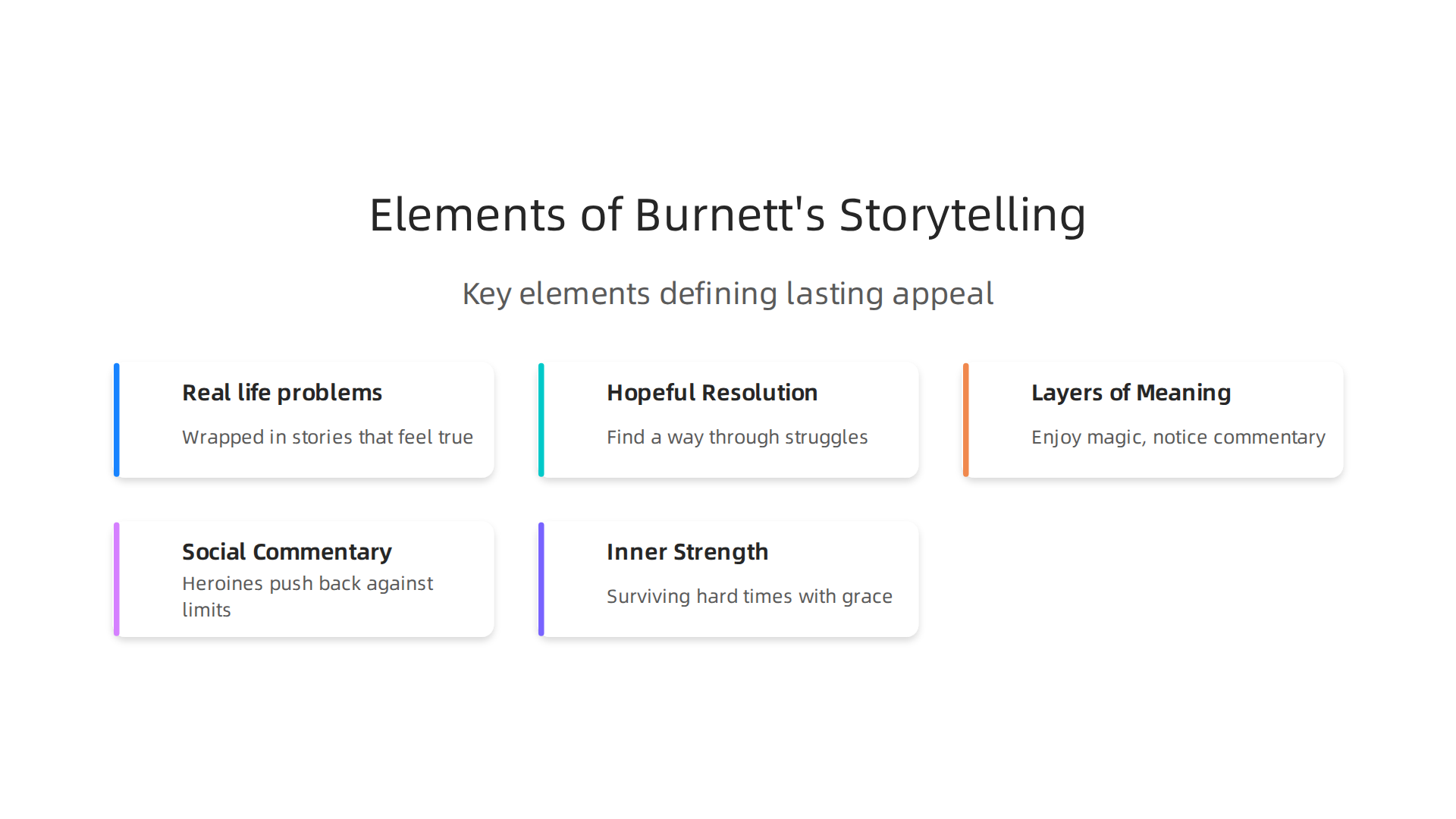
Her characters do not just escape into fantasy worlds. They face loneliness, grief, and poverty head on. And then they find a way through. That mix of honest struggle and hopeful resolution is what makes her writing so satisfying for adult readers.
Think about Mary Lennox in The Secret Garden. She starts as a spoiled, angry child who has lost everything. Most children’s books would skip over that pain. But Burnett lets us sit with it. She shows that healing takes time and often needs the help of others and a growing connection to nature. The Library of America highlights how the children in Burnett’s novels embody "values that we need and can relate to: resilience, growth, honesty."

Those are not lessons just for kids. They are the same values we look for in our own lives as adults.
Here is the part that really stands out when you read Burnett again later in life. Her stories have layers. When you are young, you enjoy the garden and the magic. When you are older, you notice the quiet social commentary woven into every page. Burnett wrote during the late Victorian and Edwardian eras, a time when class divisions were strict and women had limited choices. Her heroines push back against those limits. For example, Sara Crewe in A Little Princess refuses to let poverty steal her sense of worth. That kind of inner strength feels deeply relevant no matter what century you live in.
The historical backdrop adds another level of richness. Burnett’s own story is just as compelling. She started writing to lift her family out of poverty and went on to produce 53 novels and several successful plays. Her work does not preach. It simply shows people surviving hard times with grace and creativity. That is a message that speaks to book lovers of all ages.
If you are ready to explore classic books that reward a second reading, you might also enjoy our guide to adult fantasy books for mature readers. It features other authors who blend emotional depth with unforgettable storytelling.
The Secret Garden – A Story of Transformation
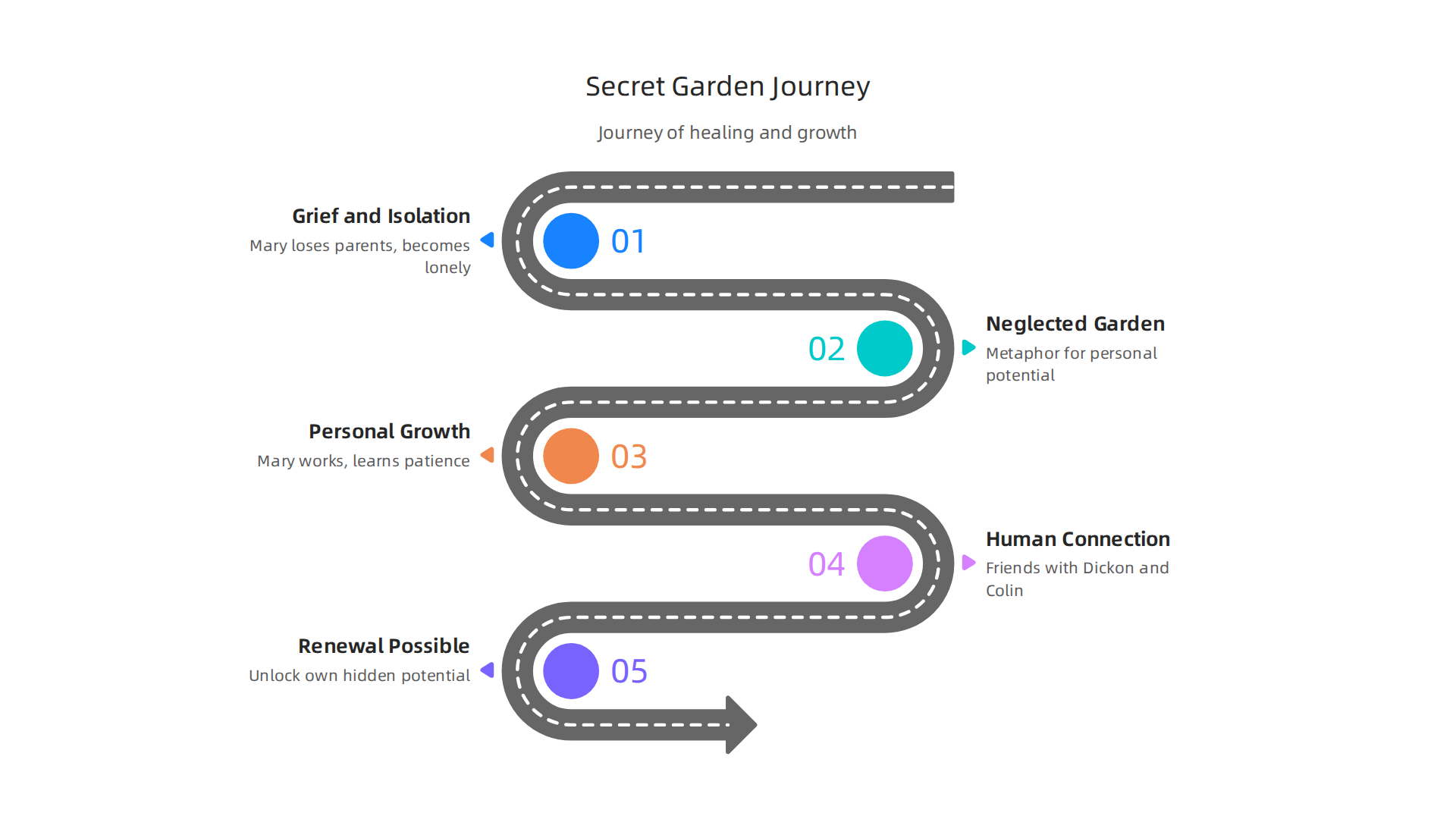
You might remember The Secret Garden as a simple children’s story about a hidden patch of flowers. Read it again as an adult, though, and you will see something very different. This book is a quiet manual for how to heal from grief and isolation.
And it is one of those frances hodgson burnett books that rewards a second read more than almost any other.
The story starts with Mary Lennox, a spoiled, lonely girl who loses her parents in India. She is sent to live at Misselthwaite Manor in England, a gloomy house full of locked doors and unspoken sadness. Mary is not very likeable at first. She is rude and selfish. But Burnett does not leave her there. Instead, Mary finds the key to a neglected garden. And as she brings the garden back to life, something inside her starts to bloom too.

This is where the real magic lies. Burnett uses the garden as a powerful metaphor for personal growth and hidden potential. The Encyclopedia.com entry on the novel notes that it is "well known for its focus on strong recurring thematic motifs of rebirth and transformation." That is exactly what makes the book so satisfying for adult readers. The transformation is not sudden or easy. Mary works at the garden day after day. She gets her hands dirty. She learns patience. She makes friends with Dickon, a boy who talks to animals, and with Colin, her sickly cousin who has been hidden away in the manor.
Through that human connection and contact with nature, both Mary and Colin start to heal. They go from being weak and isolated to strong and joyful. Archibald Craven, Colin’s father, also carries deep grief over the death of his wife. He avoids the garden and his son for years. But his slow return to the family and the garden mirrors the same theme of renewal. Burnett explores isolation, illness, and how caring for something outside yourself can change everything. The Scribd analysis of the novel emphasizes how Mary "finds purpose in caring for the garden and Colin, undergoing her own transformation from a selfish child to a compassionate one."
For adult readers facing modern stress, this story is a quiet reminder that renewal is always possible. The secret garden is not just a place. It is a state of mind. It tells us that even when life feels locked up and barren, we can unlock our own hidden potential with a little effort and a lot of patience.
If you enjoy classic books that carry deeper meaning for grown ups, you might also enjoy our curated list of classic literature for adult fantasy readers that unlocks the depth you crave.
And if you ever need a break from emotionally heavy themes, try a lighter absurd adventure with wit and strange worlds. Sometimes a little laughter is the best garden of all.
A Little Princess – Resilience and Kindness in Adversity
If The Secret Garden is a story about healing through nature and connection, then A Little Princess is a story about protecting your inner light when the world tries to snuff it out.
This is another of those frances hodgson burnett books that becomes far richer when you read it as an adult.
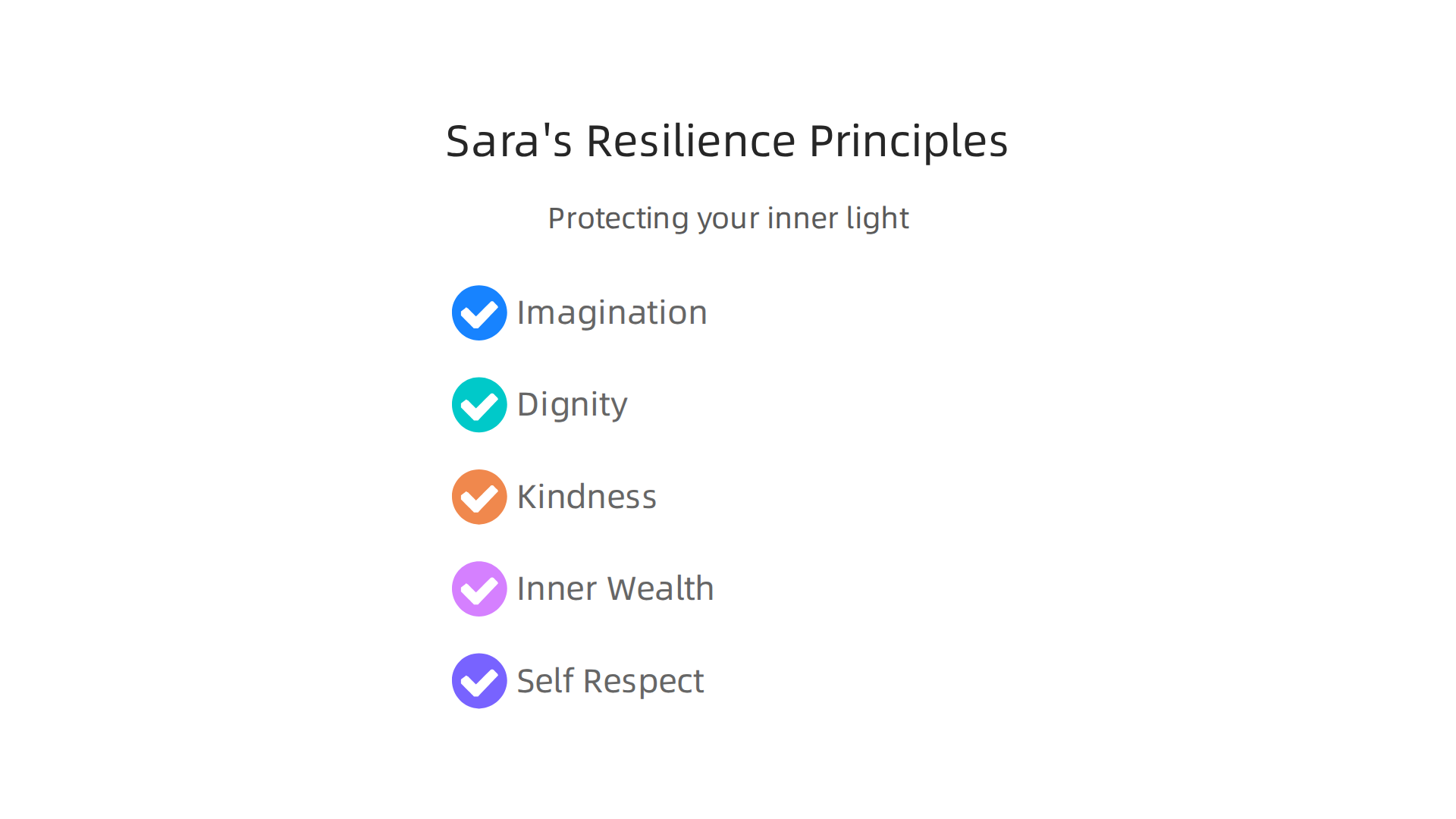
Sara Crewe starts life as a wealthy, adored child at a London boarding school. She has everything. But when her father dies and his fortune disappears, the headmistress Miss Minchin turns Sara from a prized student into a servant. She is forced to live in a cold attic, work for scraps, and wear rags. Yet Sara never truly breaks. She holds onto her imagination, her dignity, and her kindness toward others even poorer than herself.
That is the heart of this story. Burnett shows us that real wealth has nothing to do with money. Sara tells herself stories to survive the loneliness. She shares her meager food with a beggar girl. She refuses to act like a victim, even when everyone treats her like one. As the Library of America notes, the children in Burnett’s books embody "values that we need and can relate to today: resilience, growth, honesty." [1] Sara’s resilience is not about being tough or cold. It is about staying soft and kind in a harsh world.
Here is the part that hits differently for grown ups. Burnett is quietly critiquing a society that values people based on what they own. When Sara is rich, everyone loves her. When she is poor, they treat her like dirt. The story challenges us to ask: What do we really value? Are we like the cruel headmistress, judging by appearances? Or are we like Sara, who sees the worth of every person?
This critique of class inequality and materialism feels especially sharp in 2026. Many of us are surrounded by messages that tell us happiness comes from buying more. Sara’s story is a gentle reminder that inner wealth, the kind that comes from imagination, compassion, and self respect, cannot be taken away. She loses her fortune but keeps her soul.
If you love classic books that explore these deeper themes, you might enjoy our curated list of classic literature for adult fantasy readers
that unlocks the depth you crave. And if you want more stories about resilience and hidden strength, our collection of adult fantasy books for mature readers offers plenty of options that deliver real depth.
[1] Library of America, "The children’s literature of Frances Hodgson Burnett: ‘values that we need and can relate to today’" (2019, updated 2026). Link
Little Lord Fauntleroy – Social Commentary Wrapped in Charm
If A Little Princess shows us resilience through poverty, then Little Lord Fauntleroy shows us transformation through innocence. This is the book that made frances hodgson burnett books a household name. When it was published in 1886, it was the Harry Potter of its time, spawning plays, merchandise, and even early conversations about copyright law. [1]
The story follows Cedric Erroll, a poor American boy who suddenly learns he is the heir to a British earldom. He moves to England to live with his wealthy, bitter grandfather. The old earl is a hard man who despises America and looks down on everyone. But Cedric, with his honest heart and unfailing kindness, slowly melts the old man’s cold exterior.
Here is what makes this more than just a sweet children’s tale. Burnett is doing something clever with national stereotypes. Cedric represents the "new world" values of fairness and openness. His grandfather represents the "old world" snobbery of class and tradition. By showing Cedric changing his grandfather rather than the other way around, Burnett suggests that love and decency can bridge any divide.

The literariness.org analysis notes that Burnett "emphasizes the importance of love over material wealth" throughout the novel.

[2]
For book lovers who think they know this story already, the historical context adds another layer. Little Lord Fauntleroy was so popular that it sparked debates about intellectual property and merchandising rights. Burnett herself fought legal battles over unauthorized stage adaptations. That is a surprisingly modern problem for a classic books written in the 1880s.
Reading this as an adult in 2026, the message hits home. Cedric does not change his grandfather by arguing or fighting. He does it by staying true to who he is. There is something deeply hopeful in that idea, especially when the world feels divided. If you enjoy best books to read that carry a quiet social message beneath a charming surface, Little Lord Fauntleroy is worth revisiting.
If you love stories that mix charm with real meaning, check out our list of classic literature for adult fantasy readers that unlocks the depth you crave. And for something completely different but equally meaningful, you might try Read Something Weirdly Meaningful a funny sci-fi series that plays with identity, perspective, and a little chaos.
[1] Library of America, "The children’s literature of Frances Hodgson Burnett: ‘values that we need and can relate to today’" (2019, updated 2026). Link
[2] Literariness.org, "Analysis of Frances Hodgson Burnett’s Little Lord Fauntleroy" (2025, updated 2026). Link
Why Adult Readers Are Returning to Burnett’s Classics
Have you ever finished a grim fantasy novel and felt, well, a little drained? You are not alone. In 2026, more and more adult readers are turning back to the books that first made them fall in love with reading. And leading the charge are frances hodgson burnett books.
Surveys show a growing trend of adults revisiting childhood classics. Why? Because these stories offer something that modern fantasy often forgets.
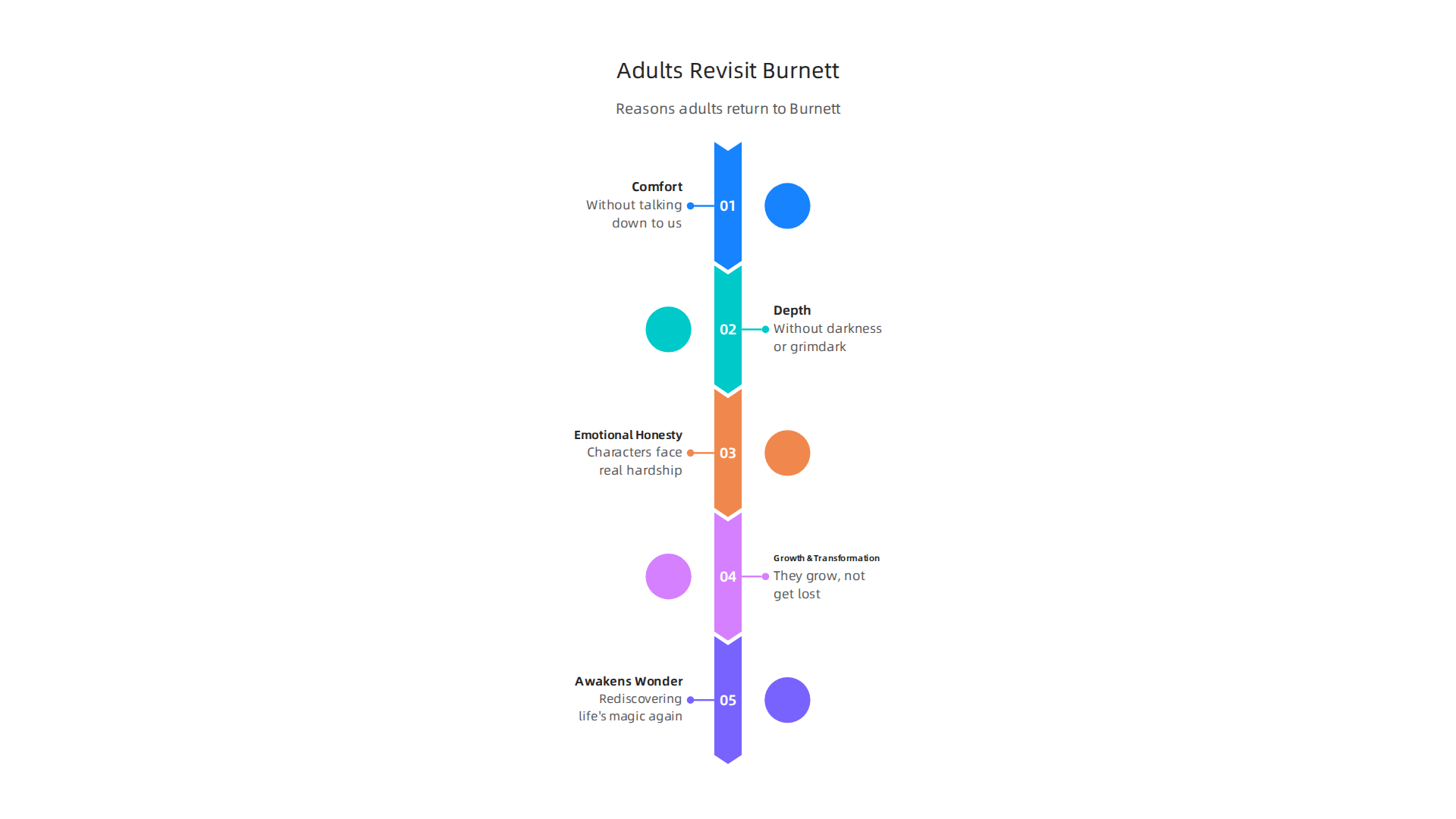
They give us comfort without talking down to us. They give us depth without darkness. The Library of America notes that the children in Burnett’s books embody "values that we need and can relate to: resilience, growth, honesty." [1] Those are not just children’s lessons. Those are adult lessons too.
Here is the thing. So much of modern fantasy leans into the grimdark. Blood, betrayal, broken worlds. It can be exhausting. Burnett’s works offer a real counterbalance. Her stories are hopeful but not naive. Her characters face real hardship, poverty, grief, isolation. But they do not get lost in despair. They grow. They transform. That kind of emotional honesty hits differently when you read it as an adult with years of life behind you.

Book lovers are catching on. Reading communities and book clubs are increasingly featuring classic literature for mature discussions. These books give you room to talk about real things. Loss. Identity. The choice to be kind when it is easier to be bitter. The article from Arts of Liberty puts it well: children’s literature "awakens our wonder for life." [2] For adult readers who crave that feeling again, Burnett is a perfect place to start.
If you are ready to explore more classic books that hold up for mature readers, check out our guide to classic literature for adult fantasy readers that unlocks the depth you crave.
And if you want something completely different but equally meaningful, try this funny sci-fi series. It is a smart, absurd adventure with humor that respects the reader. Sometimes after all the seriousness, a good laugh is exactly what you need.
[1] Library of America, "The children’s literature of Frances Hodgson Burnett: ‘values that we need and can relate to today’" (2019, updated 2026). Link
[2] Arts of Liberty, "Rediscovering Classic Children’s Literature as an Adult" (2024). Link
Building Your Classic Literature Reading List
So you are ready to dive deeper into these timeless stories. But where do you start? A good reading list does not have to feel overwhelming. And the best place to begin is right where you feel most curious.
Start with Burnett’s own trilogy. These three books are the heart of frances hodgson burnett books and the perfect entry point for adult readers. Read The Secret Garden first. It is her most famous work and the one that hits hardest on themes of renewal and emotional growth. Then move to A Little Princess, a story about choosing dignity when everything falls apart. Finally, read Little Lord Fauntleroy, the book that made Burnett a household name. It is lighter than the other two but full of warmth.
Once you finish those, do not stop. The world of classic books for adults runs deep. Try E. Nesbit, whose books like The Railway Children mix adventure with real emotional weight. Or pick up L.M. Montgomery’s Anne of Green Gables, a novel that book lovers of all ages return to again and again. Curated lists from trusted reading sites can help you find mature-themed classics without the YA overload. One excellent resource lists 100 children’s books to read in a lifetime based on expert recommendations.

[1] Another roundup highlights classic books from the 1900s that modern adults still enjoy. [2]
Here is a secret that makes this even better. Many of these classic books now come in modern annotated editions with footnotes that explain historical context, old fashioned words, and deeper meanings. And audiobooks read by celebrated actors can transform the experience entirely. Hearing a skilled narrator bring Mary Lennox or Sara Crewe to life adds a new layer of emotion you cannot get from the page alone.
If you want to explore even more, check out our guide to classic literature for adult fantasy readers that unlocks the depth you crave. It pairs perfectly with your new Burnett reading journey.
And if you ever feel like you need a break from all the emotional depth, try a lighter absurd adventure with wit and strange worlds. Sometimes a good laugh is the best reset button for a serious reader.
[1] Bibliocommons, "100 Children’s Books to Read in a Lifetime" (2026). Link
[2] What Do We Do All Day, "Classic Children’s Books By The Decade: 1900s" (2026). Link
Summary
This article argues that Frances Hodgson Burnett’s books reward a grown reader by revealing layers of emotional intelligence and social commentary that often pass unnoticed in childhood. It explains how Burnett’s best-known works—The Secret Garden, A Little Princess, and Little Lord Fauntleroy—explore themes of healing, dignity, and moral courage against late Victorian and Edwardian backdrops. You’ll learn why these stories feel satisfying now: they show characters facing real grief, poverty, and isolation and transforming through patience, human connection, and imagination. The piece outlines the historical context of Burnett’s life and career, gives a suggested reading order for adults, and points to modern editions and audiobooks that enhance understanding. By the end you’ll understand what makes her books still relevant, how to approach a second reading, and where to find other classic literature that offers similar depth.