
Introduction: The Quest for the Greatest Books
What makes a book one of the greatest books of all time? It is a question that sparks endless debate. For adult fantasy readers, the search feels more personal. You want stories with real depth.

Stories that challenge you. Stories that stay with you long after you close the cover.
The term "greatest books of all time" is deeply subjective. But we can ground it in expert and reader consensus. Many trusted lists, like the one from NPR’s survey, combine award winners and popular votes to highlight timeless titles. These collections give us a starting point.
You have likely seen lists that include George Orwell books or Michael Crichton books. Those are great in their own right. But for fantasy readers, the greatest books often come from worlds of magic, monsters, and moral questions. Think of Something Wicked This Way Comes by Ray Bradbury. For many, that was the first book that showed fantasy could be dark, poetic, and meant for adults.
This article offers a curated framework. We look past YA to find mature classics that truly resonate with adult tastes. Whether you crave epic quests or grim fantasy, these selections will help you discover the books worth your time. If you want to explore more adult-focused recommendations, check out our guide to classic literature for adult fantasy readers.
Let us begin the quest for the greatest books of all time.
What Makes a Fantasy Book One of the Greatest of All Time?
You might wonder how we decide if a fantasy book is truly one of the greatest books of all time. It is not just one thing. It is a mix of several important qualities. For adult readers who want real depth, knowing these qualities helps you pick the right book every time.
We can look at four main criteria to judge greatness:
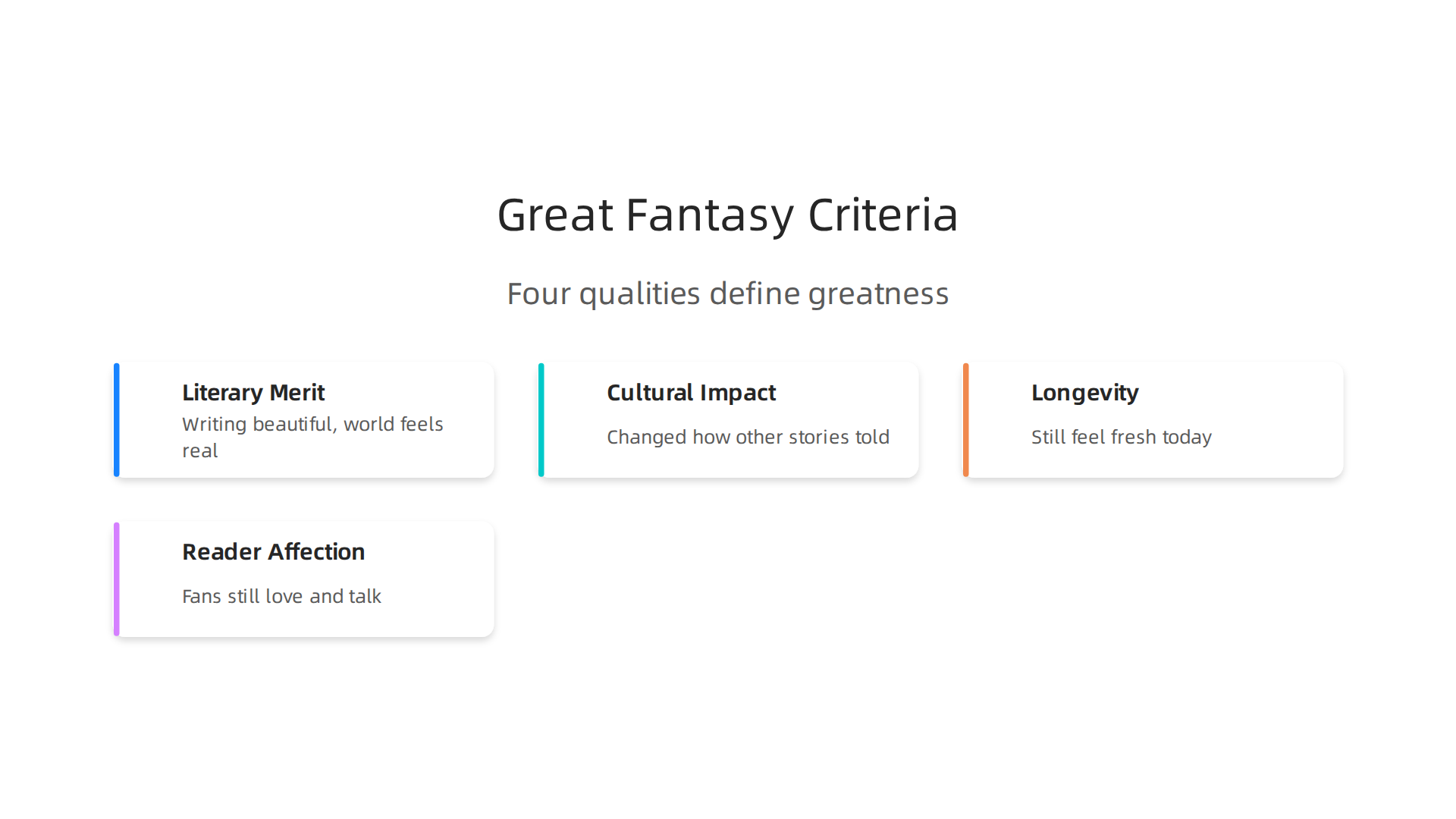
- Literary Merit. This means the writing is beautiful. The world feels real. The characters act like real people with real problems.
- Cultural Impact. Did the book change the way other stories are told? Think about how the Something Wicked This Way Comes book by Ray Bradbury shaped dark fantasy for years. It showed that fantasy could be poetic and a little scary.
- Longevity. Does the book still feel fresh today? A book that people still read twenty or fifty years later has true staying power.
- Reader Affection. Critics are not the only judges. Regular readers matter too. Books that fans still love and talk about deserve a spot on any list.
Awards are strong clues. Big awards like the Hugo Awards, the Nebula Awards, and the World Fantasy Awards often point to books with real literary merit. Actually, one approach to finding the best books uses a kind of statistical survey of fantasy literary awards to cut through personal bias. If you want to learn more about how these awards work, take a look at this guide to the fantasy and science fiction awards scene.
Reader polls show consensus. It is one thing for judges to love a book. It is another for thousands of readers to love it. Polls like the BBC’s Big Read and the Goodreads Choice Awards reveal which books have the most reader affection. The winners of NPR’s Top 100 Science-Fiction and Fantasy survey show a real mix of classic and modern titles.

These polls help confirm which stories have true cultural impact.
Even George Orwell books and Michael Crichton books teach us something about greatness. They are not always pure fantasy. But they show how a book can cross genres and stay important for decades. Greatness does not fit neatly in one box.
Try to remember the first book that really hooked you on fantasy. It probably had all these qualities. The writing was good. It changed how you saw stories. You still think about it today. And you probably recommend it to other people.
If you want to find more books with this kind of lasting depth, our guide to classic literature for adult fantasy readers is a great place to start. It connects the dots between literary quality and the fantasy worlds you already love.
This is how we build a real list of the greatest books of all time. It is not about one opinion. It is about what lasts.
Epic Fantasy Foundations: The Pillars of the Genre
Now that we know what makes a book great, we need to look at the books that built the genre. These are the foundations. Every modern epic fantasy stands on their shoulders. If you want to understand the greatest books of all time in fantasy, you start here.
Three series changed everything. They raised the bar for worldbuilding, complex morality, and deep character arcs.
Authors still study them today. Readers still discover them for the first time.
The Lord of the Rings by J.R.R. Tolkien is the big one. It created modern fantasy worldbuilding. Tolkien built a whole world with its own languages, history, and rules. No one had done that before. According to the Five Books expert recommendation by Christopher Paolini, Tolkien’s work is a key example of epic fantasy that offers a rich world to get lost inside.
It is the standard that every other series is measured against.
A Song of Ice and Fire by George R.R. Martin changed the game in a different way. Before Martin, fantasy often had clear good guys and bad guys. Martin showed that heroes can make awful choices and villains can be sympathetic. This complex morality made the story feel real. It is one of the most influential series of the last few decades. On lists like the Fantasy Book Review’s top 100 fantasy books, it sits near the top because readers and critics both love it.
The Earthsea Cycle by Ursula K. Le Guin brought depth to character arcs. Le Guin focused on inner growth and the cost of power. Her characters learn hard lessons. The world feels ancient and wise. It proved that fantasy could be literary art.
These three pillars continue to influence modern authors. Creators of new series like The Legends of the First Empire or King Rolen’s Kin build on what these giants started. Even in 2026, BookTubers still recommend these foundational series as must-reads.
If you want to see how these pillars connect to other classics, check out our guide to classic literature for adult fantasy readers. It shows how literary quality and epic worlds go hand in hand.
Understanding these foundations helps you spot greatness in newer books. They are the reason why the genre keeps growing.
Dark Fantasy and Mature Themes: Unforgettable Journeys
But not every great fantasy story shines with bright heroes and happy endings. Some of the greatest books of all time in the genre take you into the shadows. They ask hard questions about right and wrong. They show you worlds that feel dangerous and real. These are dark fantasy books, and they push the boundaries of what fantasy can do.
Dark fantasy explores complex moral questions, psychological depth, and unsettling worlds. It does not give you easy answers.

Instead, it makes you think. Classics like The Sandman by Neil Gaiman, The Book of the New Sun by Gene Wolfe, and American Gods by Neil Gaiman have pushed boundaries in ways that still feel fresh today. According to Five Books expert recommendations, dark fantasy includes works like The Bloody Chamber by Angela Carter, which blends fairy tales with horror and desire. That list is a great place to start if you want to see how dark this subgenre can get.
If you want a more recent guide on where to begin, Grimdark Magazine offers a helpful list of essential dark fantasy reads.
They point to The Black Company by Glen Cook as the book that pretty much created grimdark fantasy. That series started as a trilogy and expanded to over ten books. It shows how dark fantasy can grow with its readers.
These works appeal to adult readers who want sophistication beyond YA tropes. If you are tired of teenage heroes and safe endings, dark fantasy gives you something deeper. It does not shy away from pain, loss, or moral failure. You might find yourself thinking about a character’s choice for days after you finish the book.
There is also a strong YA dark fantasy scene, but adult readers often want more. The Epic Reads list of 18 dark fantasy books includes titles like The Scarlet Veil, but many of those still carry YA sensibilities. For real depth, you want the classics. Something like Something Wicked This Way Comes by Ray Bradbury. That book feels timeless because it deals with childhood fears but also with adult regrets.
Many dark fantasy series start with a first book that hooks you immediately. The Black Company is one example. Another is The Lies of Locke Lamora by Scott Lynch. These first books set the tone for entire series.
If you enjoy the moral weight of George Orwell books or the scientific tension of Michael Crichton books, dark fantasy offers a similar kind of intellectual challenge. It just wraps it in magic and monsters.
For more recommendations that match your taste for mature themes, check out our guide to adult fantasy books for mature readers. It helps you find stories that respect your intelligence and your life experience.
[internal link: https://fantasybooksforadults.com/adult-fantasy-books-for-mature-readers-who-want-stories-with-real-depth]
Comic Fantasy and Wit: Laughter That Lasts
Not all great fantasy is grim. Some of the greatest books of all time in the genre will make you laugh out loud.

They use humor to explore big ideas about life, society, and human nature. These books prove that fantasy does not need to be serious to be powerful.
Terry Pratchett’s Discworld series is the best example. It has over 40 books, and each one mixes fantasy with sharp satire. Pratchett pokes fun at everything from government to religion to Hollywood. But underneath the jokes, he asks real questions about justice, death, and what it means to be human. You might start Guards! Guards! for the laughs, but you stay for the wisdom. According to the Center for Fiction, classic comic novels like The Master and Margarita show how humor can reveal deeper truths. Discworld does the same thing.
Then there is The Hitchhiker’s Guide to the Galaxy by Douglas Adams. That book is sci-fi, sure, but it feels like fantasy in spirit. It is about a regular guy thrown into a crazy universe. The humor comes from Adams’s clever wordplay and his view of human absurdity. If you enjoy the intellectual challenge of George Orwell books or the tension of Michael Crichton books, you will love how Adams makes you think while you laugh.
And do not forget Good Omens by Neil Gaiman and Terry Pratchett. It is about an angel and a demon who team up to stop the apocalypse. The book is funny, yes. But it also explores friendship, free will, and the gray areas between good and evil. It is a perfect first book for someone new to comic fantasy.
These works attract readers who love satire and clever wordplay. If you want a story that feels light on the surface but has real depth underneath, comic fantasy delivers every time. For more recommendations that blend wit with substance, check out our guide to classic literature for adult fantasy readers. It helps you find stories that are smart, funny, and unforgettable.
Literary Fantasy: Where Genre Meets High Art
Not all fantasy is about swords and dragons. Some of the greatest books of all time live in a space where fantasy becomes literature. These stories are studied in universities. They win major awards. And they prove that fantasy can be just as deep as any classic novel.
Take Ursula K. Le Guin. Her book The Left Hand of Darkness is set on a frozen planet where people can change gender. That sounds like pure fantasy. But Le Guin uses that idea to ask big questions about identity, society, and what it means to be human. She challenges you to rethink everything you assume about gender and culture. If you enjoy the political themes in George Orwell books, you will find a similar intellectual spark here.
Then there is Jorge Luis Borges. His collection Ficciones is a strange, beautiful puzzle. Stories about infinite libraries, imaginary books, and a man who forgets nothing. Borges bends reality and time. He makes you work as a reader. But that effort pays off with moments of deep insight. These are not easy reads. They are more like brain exercises. And they change the way you see the world.
John Crowley is another name you should know. His novel Little, Big is a sprawling family saga about a house that connects to a fairy world. The prose is gorgeous. The story moves like a dream. Crowley blends fantasy, history, and magic into something that feels both ancient and new. Critics compare it to the best works of literary fiction.
These books share a few things. They challenge you with unusual structures. They explore philosophy, not just plot. And they ask you to read actively. As with the best dark fantasy books, they push boundaries and demand your full attention. If you are looking for a first book in this style, start with Le Guin. She is the most accessible gateway.
One more classic to mention: something wicked this way comes book by Ray Bradbury. It sits at the edge of literary fantasy. Bradbury uses a carnival of horrors to explore aging, fear, and friendship. His language is poetic. His themes are timeless. It is a perfect example of how fantasy can be high art.
If you love the intellectual thrill of Michael Crichton books, you will appreciate how literary fantasy makes you think while it entertains. These are stories that reward rereading. They stay with you long after the final page.
For more recommendations that blend fantasy with literary depth, check out our guide to why Shirley Jackson books matter for adult fantasy readers. It explores another author who built bridges between genre and high art.
Hidden Gems and Underrated Classics: Expanding Your Reading Horizons
You have read the big names. Tolkien. Le Guin. Bradbury. They earned their spot among the greatest books of all time. But here is the truth. Many fantastic novels never get the attention they deserve. Marketing budgets dry up. Genre labels confuse readers. A brilliant book slips through the cracks.
This happens more than you think. Some of the most rewarding fantasy stories are hidden in the backlist. They sit on library shelves, waiting for you. And they offer new perspectives you will not find in mainstream hits.
So how do you find them? Start with award shortlists. The World Fantasy Award and the British Fantasy Society Awards often highlight unusual voices.
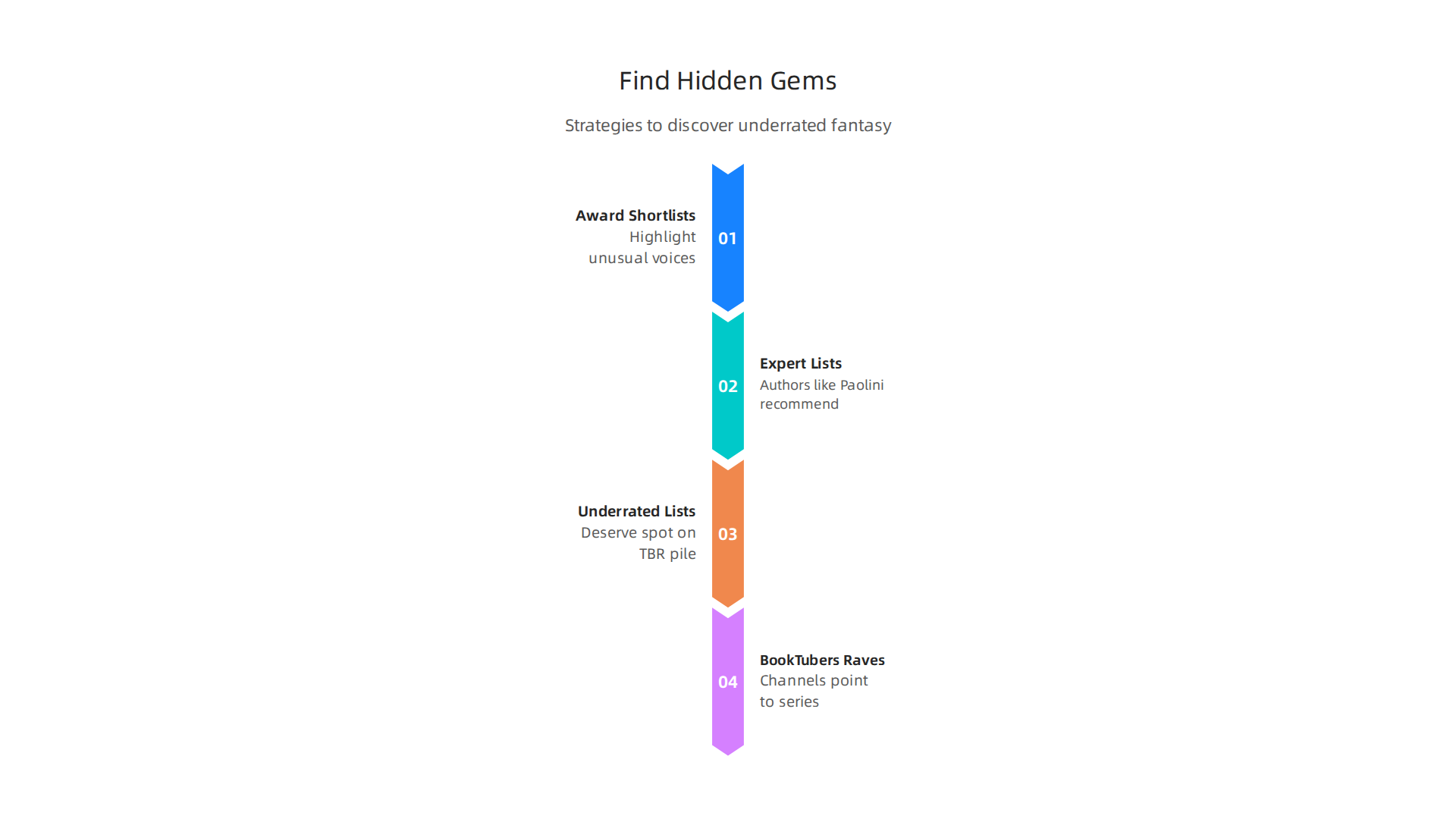
Check out expert lists like the one from Five Books, where authors like Christopher Paolini recommend five key examples of great epic fantasy. Another good trick is to look at "underrated" lists. For example, Grimdark Magazine has a list of ten criminally underrated fantasy books that definitely deserve a spot on your TBR pile.
Another strategy is to explore series that BookTubers rave about. In 2026, popular fantasy channels keep pointing to series like Memory, Sorrow and Thorn as a hidden gem that shaped modern fantasy. These are not obscure reads. They are just overlooked. And they often deliver deeper worldbuilding and richer characters than the most hyped new releases.
Picking a first book by a lesser-known author can be a risk. But it often pays off. You get fresh ideas that break away from tired tropes. Think about how George Orwell books and Michael Crichton books offer unique, thought-provoking premises. Underrated fantasy does the same thing, just with magic and monsters.
If you are ready to dig deeper, check out our guide on classic literature for adult fantasy readers. It shows how timeless stories can unlock the depth you crave in your reading.
Here is the bottom line. The greatest books of all time are not always on the bestseller list. Some are quietly waiting for you to find them. And once you do, your reading world gets a whole lot bigger.
Building Your Personal Canon: A Reading Plan for Adult Fantasy Fans
You know the feeling. You finish a book and want to talk about it, but no one else has read it. Or you wander the library aisle with no idea where to start. That is where a personal canon helps. A personal canon is not a list of every greatest books of all time ever written. It is your own curated set of stories that shaped your taste as a reader.
Here is a simple plan to build yours.
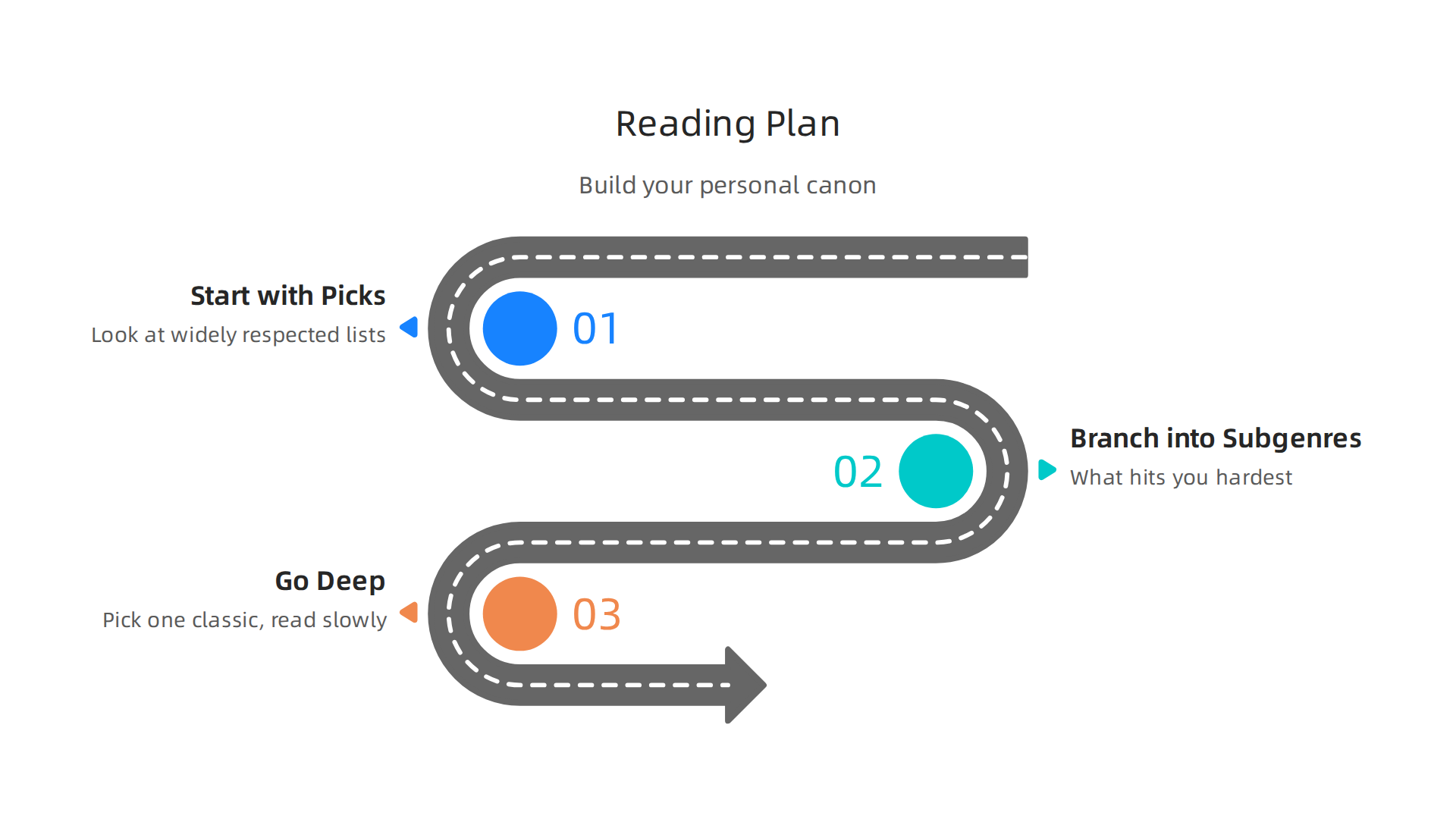
Start with consensus picks
Every great reading journey begins with a foundation. Look at widely respected lists like NPR’s Top 100 Science-Fiction & Fantasy survey, which mixes classic and contemporary titles into a solid starting point. You can also check the expert recommendations at Five Books, where authors and critics share their top picks.
These lists give you a map of the terrain. Read a few of these to understand what the fantasy world values.
Branch into subgenres that speak to you
After you read a handful of consensus favorites, pay attention to what hits you hardest. Do you love the dark, psychological tension in Something Wicked This Way Comes? Or the sprawling worldbuilding of epic fantasy? Maybe you crave the sharp social commentary you find in George Orwell books or the fast-paced thrill of Michael Crichton books. Let those instincts guide your next picks.
Try a themed reading challenge. For example, the Lonesome Reader challenge suggests “12 Classics to Read in 2026” as a way to stay focused. You can tweak it for fantasy. Or join a book club that specializes in adult fantasy. The Book Club Review has a curated list of tried-and-tested fantasy books from passionate readers.
Go deep, not wide
The real magic comes from depth, not breadth. Pick one classic like The Lord of the Rings and read it slowly. Take notes. Look up discussions. Read a critical essay or two. Then read something that influenced it, like The Once and Future King. This approach trains your eye and builds real taste.
If you want to explore how classic literature unlocks the depth adult fantasy readers crave, check out our guide on classic literature for adult fantasy readers. It shows you exactly how to make those connections.
The goal is not to read every first book on a list. It is to read the right ones for you. Build a canon that reflects who you are as a reader, and your reading life will never feel aimless again.
Summary
This article maps how to identify and read the greatest fantasy books of all time with an adult reader in mind. It explains four practical criteria—literary merit, cultural impact, longevity, and reader affection—and shows how awards and polls can help cut through personal bias. The guide highlights foundational epic series (Tolkien, Martin, Le Guin), explores dark and comic fantasy strands, and points to literary works that blur genre and high art. It also offers tactics for uncovering underrated gems and a clear reading plan to build a personal canon that fits your tastes. Along the way you’ll learn which first books often hook adult readers, where to look online, and how to move from broad consensus picks into deeper, more rewarding reads.